


Most people don’t search “pelvic floor” because they want to study anatomy. They search because of urine leakage, postpartum weakness, weak core activation, or pelvic heaviness.
What Is the Pelvic Floor?
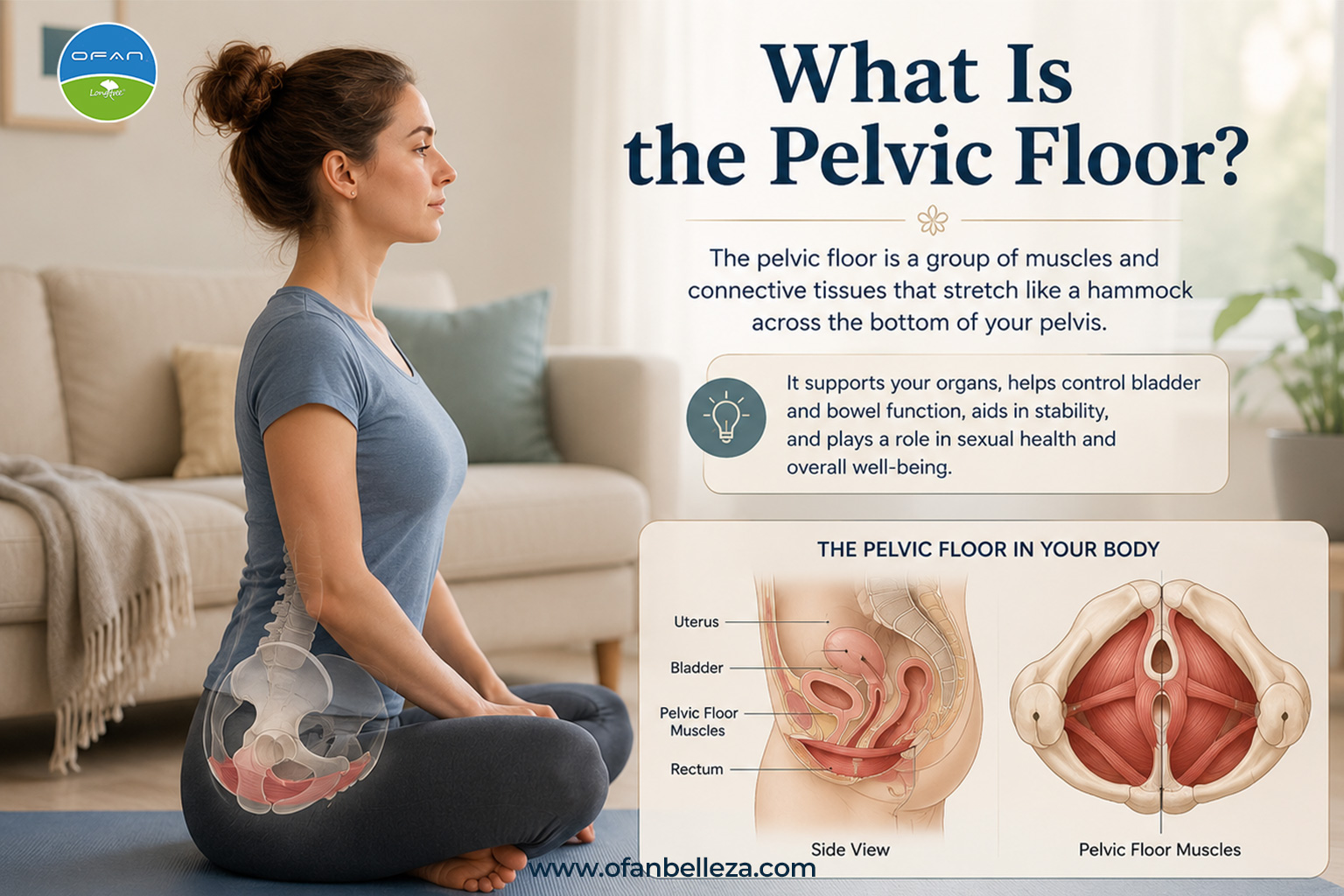
The pelvic floor is not a single muscle. It is a group of muscles and connective tissues located at the bottom of the pelvis, acting like a supportive hammock for pelvic organs.
- Bladder
- Uterus in women
- Rectum
Where Is the Pelvic Floor Located?
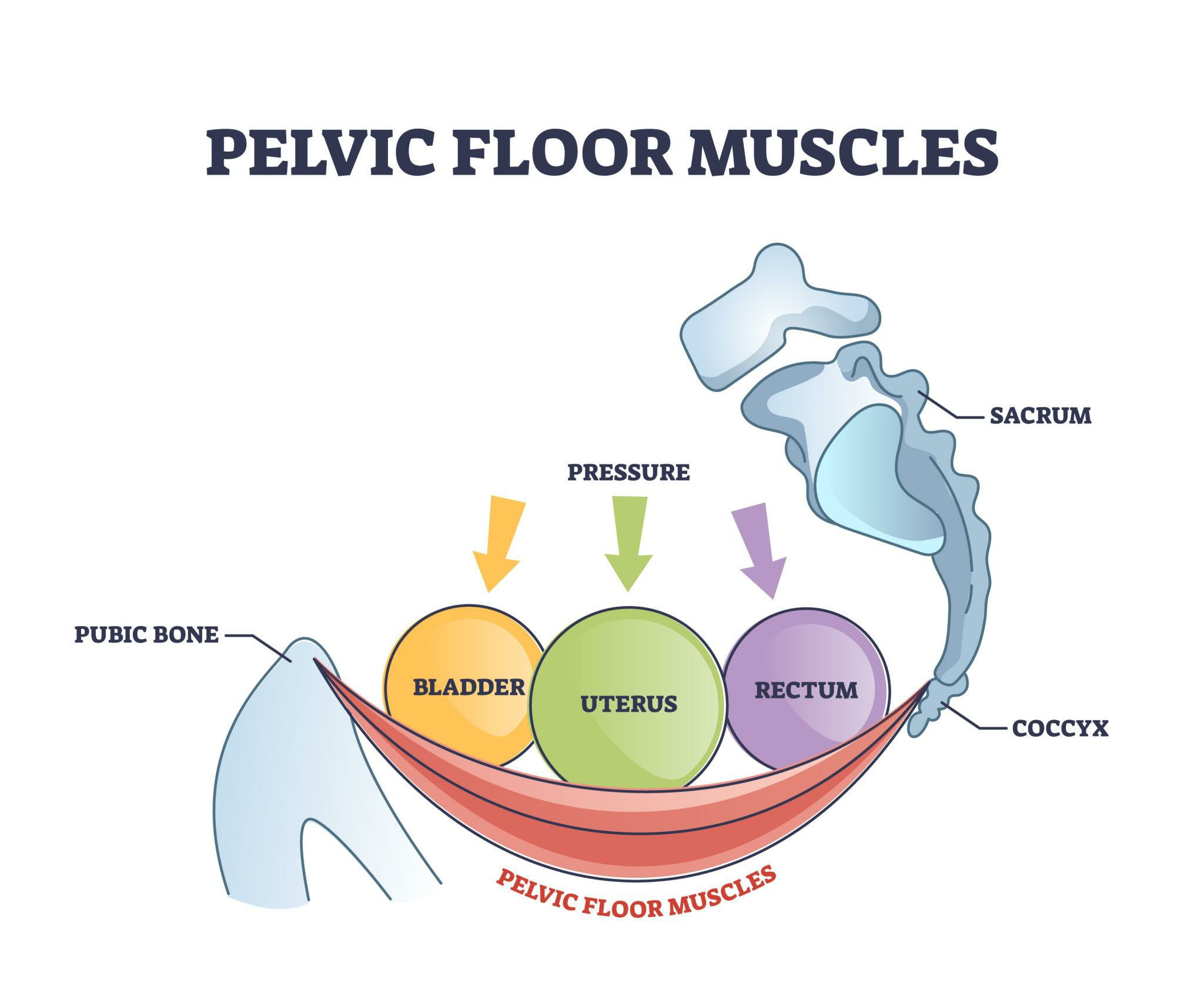
The pelvic floor stretches between the pubic bone, tailbone, and sitting bones.
Simple Explanation
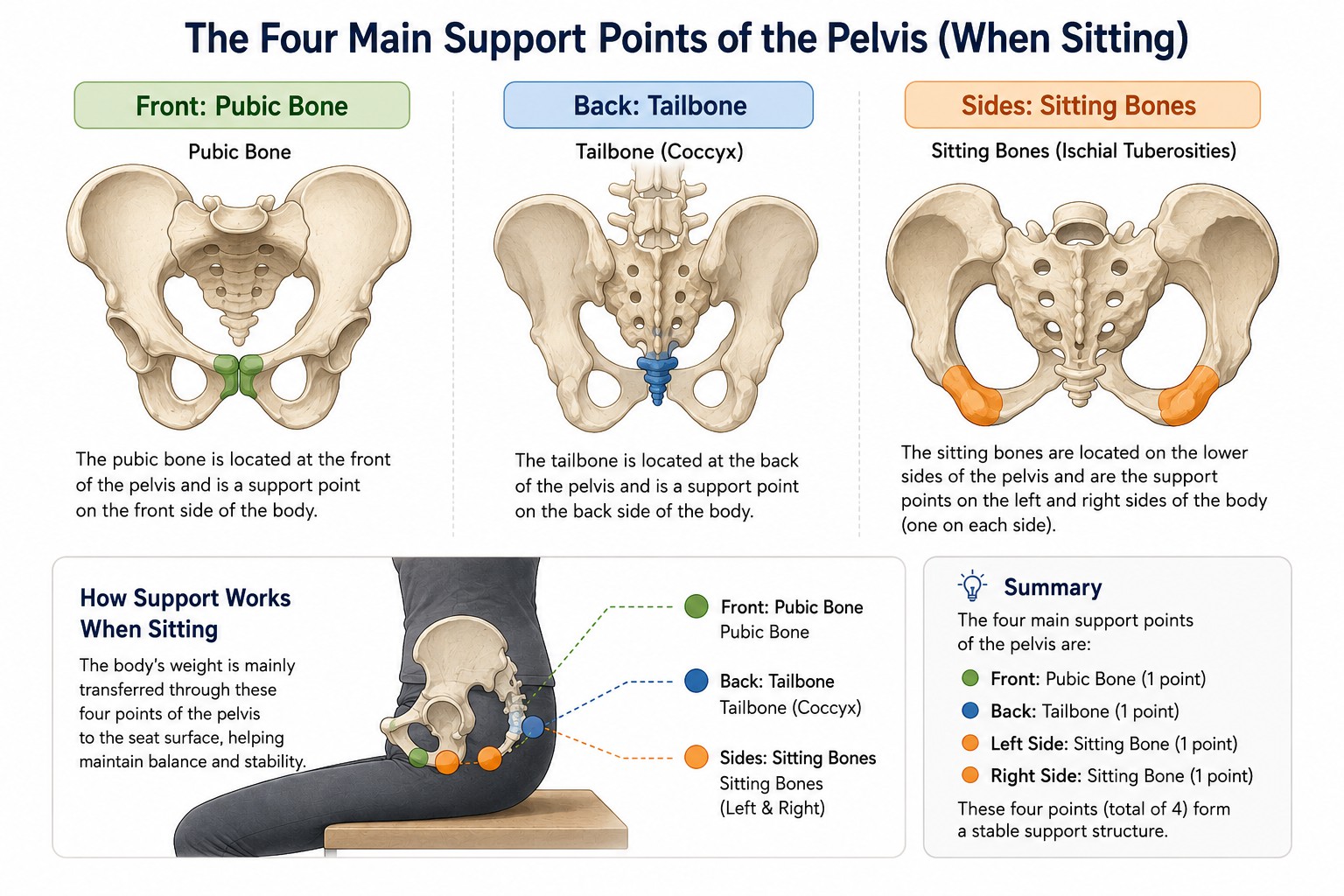
- Front: pubic bone
- Back: tailbone
- Sides: sitting bones
Why Is the Pelvic Floor Important?
The pelvic floor affects more than urine leakage. It plays a role in core stability, bowel control, sexual function, and pressure management.
| English Function | Why It Matters |
|---|---|
| Organ Support | Helps support pelvic organs |
| Bladder Control | Helps reduce leakage |
| Bowel Control | Supports bowel movement control |
| Core Stability | Works with the core pressure system |
| Sexual Function | Affects comfort and sensitivity |
How Does the Pelvic Floor Work?
The pelvic floor does not work alone. It coordinates with the diaphragm, deep abdominal muscles, glutes, and lower back to manage pressure and stability.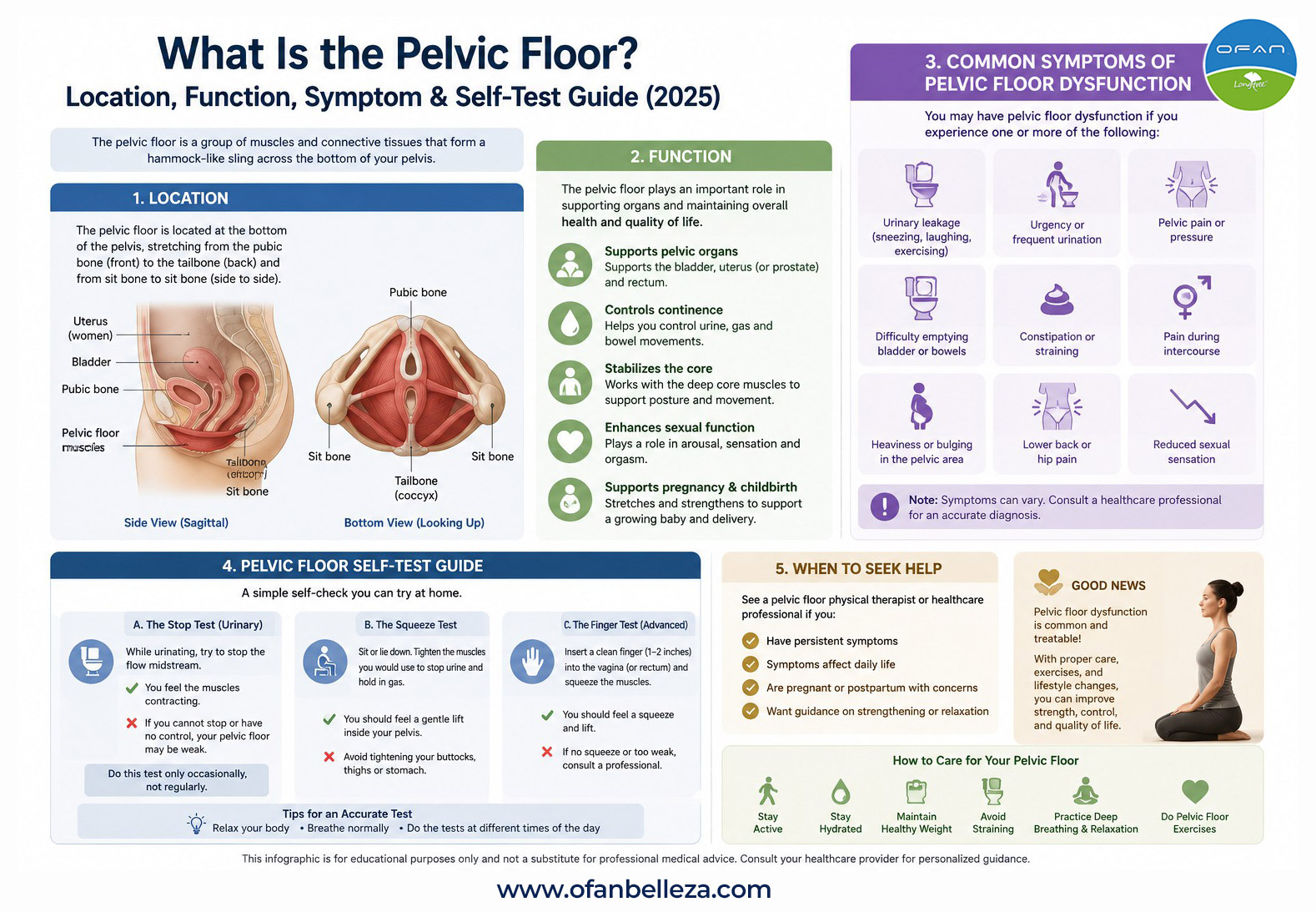
Looking for a more professional pelvic floor rehabilitation solution?
Explore our Pelvic Floor Therapy Machine to learn about biofeedback, EMS stimulation, training modes, and suitable applications for clinics, rehab centers, and distributors.
👉Click to View: Pelvic Floor Therapy Machine
👉READ MORE
Real Example: Why Leakage Happens During Squats
Many people assume leakage during squats means weak legs. More often, it is related to poor breathing mechanics, pressure mismanagement, poor core coordination, and excessive pelvic floor loading.
Symptoms of Pelvic Floor Dysfunction
- Leaking urine when sneezing
- Leakage during jumping
- Pelvic heaviness
- Chronic constipation
- Weak core activation
- Lower back pain
- Discomfort during intercourse
How to Self-Test Your Pelvic Floor
Note: Home testing does not replace professional evaluation.
Method 1: The Cough Test
- Have a partially full bladder
- Stand upright
- Cough firmly 3 times
- Check for leakage
| Result | illustrate |
|---|---|
| No leakage | Likely normal function |
| Mild leakage | Mild dysfunction possible |
| Significant leakage | Professional assessment recommended |
Method 2: Stop-Urine Test
This method can help you identify the pelvic floor sensation, but it should not be used as regular training.
The correct feeling is not squeezing the glutes, tightening the thighs, or holding your breath. It should feel like a gentle internal lifting sensation.
Do Kegel Exercises Actually Work?
Kegel exercises can help, but many people perform them incorrectly. Proper training is not about doing more repetitions; it is about correct contraction, relaxation, breathing, and control.
Common Mistakes
- Squeezing the glutes instead
- Overusing the thighs
- Holding the breath
- Doing hundreds per day
| Type | Common symptoms |
|---|---|
| Weak Pelvic Floor | Leakage, heaviness |
| Tight Pelvic Floor | Pain, urgency, tension |
How Clinics Evaluate Pelvic Floor Dysfunction
Muscle Strength Grading
| Grade | illustrate |
|---|---|
| 0 | No contraction |
| 3 | Moderate contraction |
| 5 | Strong contraction |
Biofeedback Devices
Clinics commonly use biofeedback devices to measure contraction strength, endurance, and relaxation ability.
Real Statistics: How Common Is Pelvic Floor Dysfunction?
| Group | Risk situation |
|---|---|
| Postpartum Women | About 30%-50% report leakage |
| Chronic Constipation | Increased pelvic pressure |
| Sedentary Workers | Reduced core coordination |
| Heavy Lifters | Higher pressure management risk |
How to Choose a Pelvic Floor Device
Many users search for “Do pelvic floor devices work?”, “EMS vs biofeedback?”, and “best Kegel trainers.” When choosing a device, don’t only look at vibration intensity or stimulation strength.
| Type | Principles | Best For |
|---|---|---|
| Biofeedback | Active training | Beginners |
| EMS Stimulation | Passive muscle stimulation | Weak muscle activation |
| Smart App Devices | Data recording + training | Long-term users |
What to Check Before Buying?
- Medical certifications
- Measurable tracking
- Relaxation training
- Rehab methodology
- Whether it matches your symptoms
FAQ
Q: Can pelvic floor weakness recover?
A: Mild to moderate dysfunction often improves with proper training, breathing correction, and pressure management.
Q: How many Kegels should I do daily?
A: In most cases, quality matters more than quantity. Frequency should be adjusted based on individual condition and professional guidance.
Q: Is exercise leakage normal?
A: Exercise leakage is common, but it is not normal. It often indicates pelvic floor or pressure control dysfunction.
Final Takeaway
The pelvic floor is not only a postpartum topic. It is part of the core stability system, pressure management system, and bladder control system.
If you already experience leakage, pelvic heaviness, weak core activation, or long-term pelvic pressure, early assessment and proper rehab usually lead to better outcomes.
👉Click to View: Pelvic Floor Therapy 


