


Plasma skin and scalp treatment is becoming popular in beauty clinics, med spas, and professional scalp-care centers. But many people still confuse cold plasma, hot plasma, plasma pens, and PRP. This beginner’s guide explains what plasma treatment really is, what it may help with, what it cannot do, and how to choose a safe, professional provider.
What Is Plasma Skin & Scalp Treatment?
Plasma skin and scalp treatment uses energized gas, known as plasma, to interact with the surface of the skin or scalp. Depending on the device, plasma may produce controlled heat for skin resurfacing, or it may work as non-thermal cold plasma to support surface hygiene, skin comfort, barrier recovery, and scalp environment balance.
In simple terms, hot plasma is usually used for stronger resurfacing or tightening-style treatments, while cold plasma is usually used for gentler surface support, acne-prone skin care, scalp care, or recovery-focused protocols. They are not the same treatment.
Plasma Treatment Is Not PRP
One of the most common misunderstandings is confusing plasma skin treatment with PRP. PRP stands for platelet-rich plasma. It is prepared from a patient’s own blood and is often used in medical aesthetic or hair-loss treatment plans.
Plasma skin and scalp devices are different. They use ionized gas energy, not blood-derived plasma. The word “plasma” appears in both names, but the technology, mechanism, and treatment experience are completely different.
Hot Plasma vs Cold Plasma: What Is the Difference?
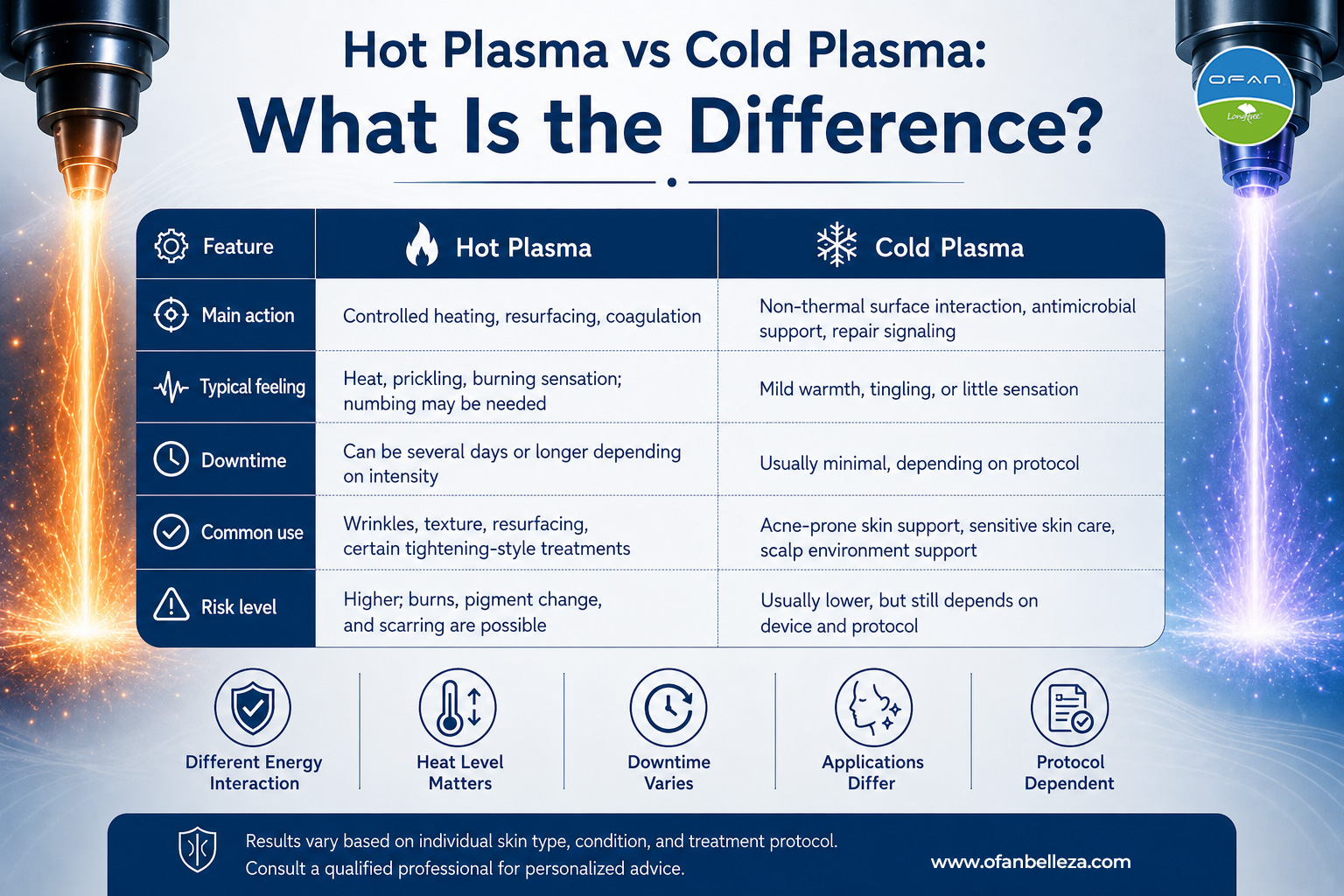
| Feature | Hot Plasma | Cold Plasma |
|---|---|---|
| Main action | Controlled heating, resurfacing, coagulation | Non-thermal surface interaction, antimicrobial support, repair signaling |
| Typical feeling | Heat, prickling, burning sensation; numbing may be needed | Mild warmth, tingling, or little sensation |
| Downtime | Can be several days or longer depending on intensity | Usually minimal, depending on protocol |
| Common use | Wrinkles, texture, resurfacing, certain tightening-style treatments | Acne-prone skin support, sensitive skin care, scalp environment support |
| Risk level | Higher; burns, pigment change, and scarring are possible | Usually lower, but still depends on device and protocol |
How Plasma Skin Treatment Works
1. Surface Interaction
Plasma interacts with the surface of the skin through charged particles, reactive oxygen and nitrogen species, light, and electromagnetic effects. In practical skincare language, this is why cold plasma is often used in protocols focused on skin comfort, surface hygiene, and recovery support.
2. Controlled Thermal Effect
Some plasma devices create controlled heat in the outer skin layers. This can trigger a resurfacing response, but it also means more responsibility: correct settings, proper distance, skin-type assessment, and strict aftercare are essential.
3. Treatment Environment Support
In many professional clinics and beauty centers, cold plasma is used as an add-on step before or after facial care, acne care, scalp cleansing, LED therapy, or mild resurfacing programs. It is often positioned as a supportive treatment rather than a standalone “miracle cure.”
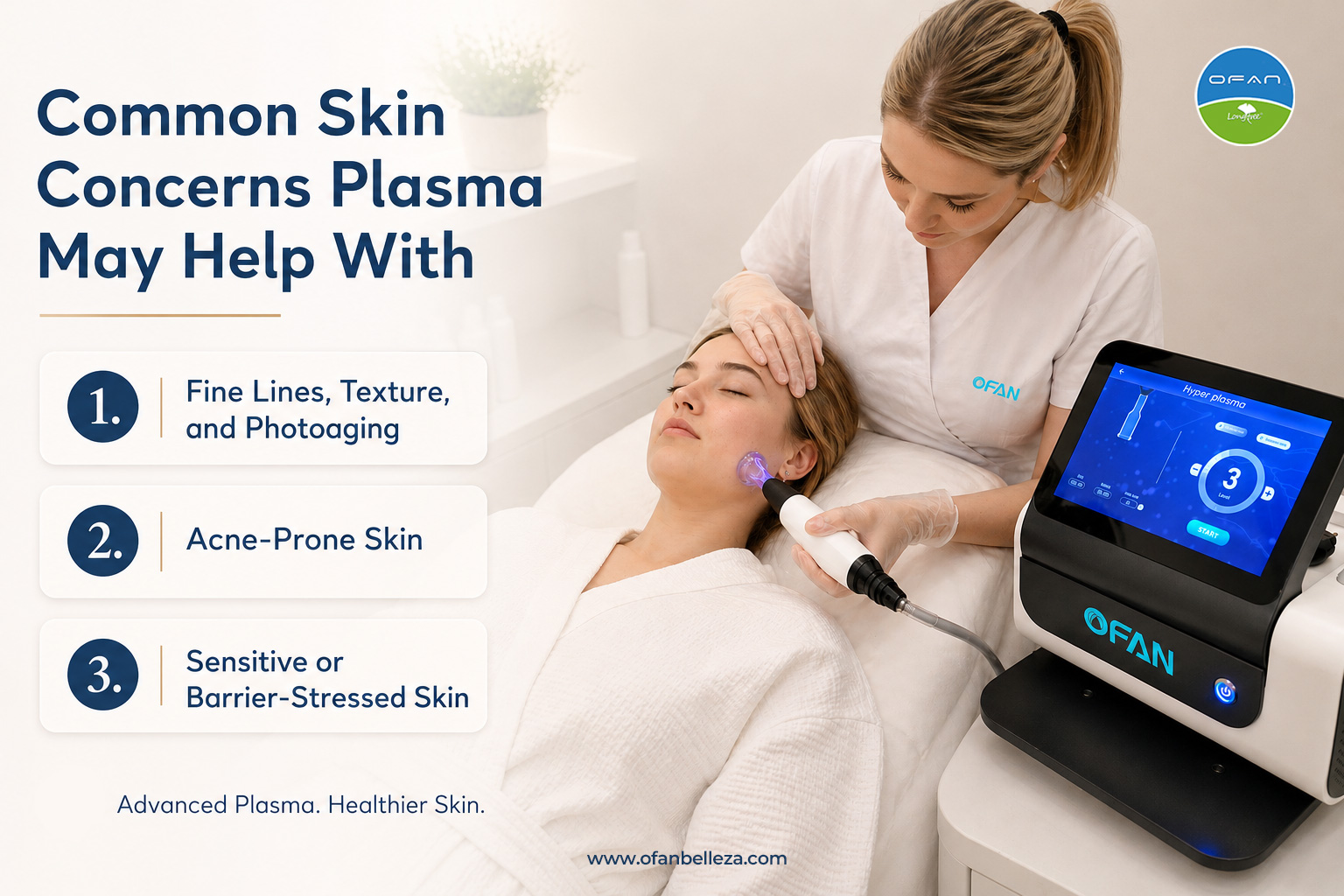
Common Skin Concerns Plasma May Help With
1.Fine Lines, Texture, and Photoaging
Thermal plasma resurfacing may be considered for people who want improvement in fine lines, uneven texture, dullness, and visible signs of photoaging. The stronger the resurfacing goal, the more important it is to understand downtime and risks.
2.Acne-Prone Skin
Cold plasma is often discussed in acne-prone skin care because acne is not only about oil or dirt. It involves follicles, sebum, bacteria, inflammation, and skin barrier tolerance. For some people, cold plasma may be used as a supportive step alongside a proper acne routine.
3.Sensitive or Barrier-Stressed Skin
Cold plasma is often marketed as gentle, but gentle does not mean suitable for everyone. A professional provider should still check recent exfoliation, retinoid use, sunburn, active dermatitis, medication history, and skin sensitivity before treatment.
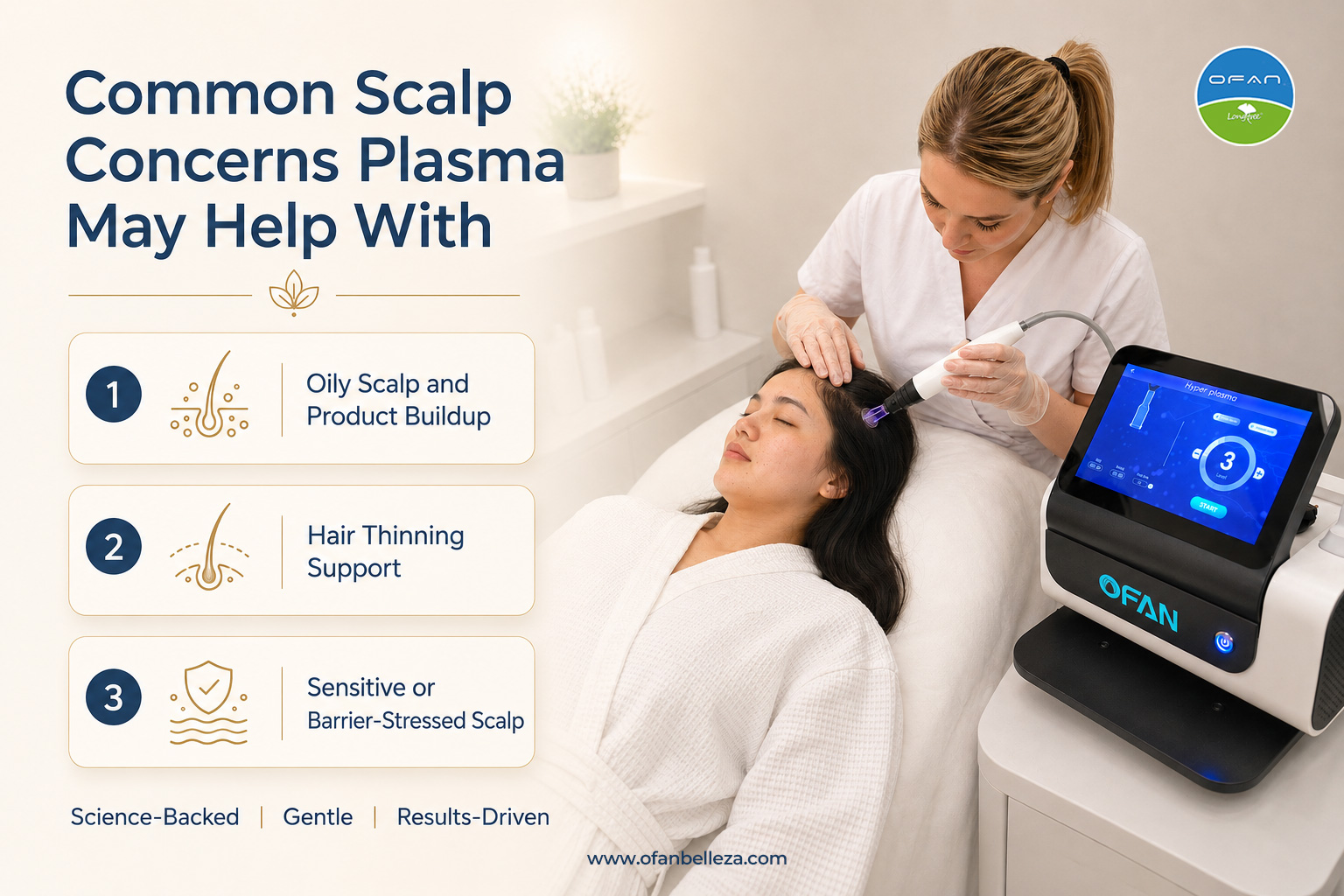
Common Scalp Concerns Plasma May Help With
1.Oily Scalp and Product Buildup
A plasma scalp treatment should not be sold as a magic hair-growth shortcut. A more realistic goal is to support a cleaner, calmer scalp environment, especially for people with oiliness, buildup, mild itchiness, or scalp discomfort after heavy product use.
2.Hair Thinning Support
Cold plasma may be included in some scalp-care plans for hair thinning support, but the evidence is still developing. If someone has sudden shedding, patchy hair loss, scalp pain, heavy scaling, or visible inflammation, the first step should be scalp diagnosis, not a beauty treatment.
Who Is Plasma Skin & Scalp Treatment For?
Plasma treatment may be worth discussing if you are looking for:
- A non-laser option for dullness, rough texture, or early aging.
- A gentle facial add-on with minimal downtime.
- Supportive care for acne-prone or easily irritated skin.
- A scalp-care add-on for oiliness, buildup, or scalp discomfort.
- A professional treatment plan that includes photos, records, aftercare, and follow-up.

Plasma treatment is not ideal for people expecting instant lifting, guaranteed hair regrowth, one-session scar removal, or a completely risk-free procedure.
What Plasma Treatment Cannot Do
1.It Cannot Replace Medical Diagnosis
If a mole is changing, a scalp patch is painful, acne is cystic, or hair loss is sudden, plasma should not be the first answer. A medical diagnosis should come first.
2.It Cannot Regrow Dead Hair Follicles
Cold plasma may support the scalp environment, but it should not be sold as a guaranteed solution for advanced baldness. For real hair loss, users should discuss proven options with a qualified clinician.
3.It Cannot Make Skin Perfect Overnight
For pores, texture, pigmentation, wrinkles, and acne scars, plasma may help as part of a larger plan. Realistic improvement usually requires multiple sessions, home care, sunscreen, and time.
What Happens During a Real Plasma Skin or Scalp Session?
Step 1: Consultation and Screening
A responsible provider should ask about your treatment goals, skin type, recent sun exposure, pregnancy status, medications, cold sore history, keloid tendency, isotretinoin use, active infection, implanted devices, and recent cosmetic procedures.

Step 2: Baseline Photos
Photos should be taken under consistent lighting, from the same angles and distance. For scalp care, part-line photos and fixed-area density photos are more useful than casual selfies.
Step 3: Skin or Scalp Preparation
The treatment area is cleansed first. For stronger thermal plasma procedures, topical numbing or additional pain control may be needed. For gentle cold plasma care, many users only feel mild warmth or tingling.
Step 4: Device Application
The practitioner moves the device handpiece across the treatment area according to the device protocol. Treatment time, distance, energy level, number of passes, and treated area should be recorded.
Step 5: Aftercare
Aftercare may include soothing products, sunscreen, avoiding exfoliating acids or retinoids for a period, and monitoring redness, swelling, crusting, pain, or pigment changes.
What a Professional Provider Should Record
A trustworthy plasma treatment record should include:
- Date and treatment area
- Device brand and model
- Plasma type and settings
- Skin type and contraindication check
- Baseline photos
- Treatment time or number of passes
- Products used before and after treatment
- Immediate skin or scalp response
- Aftercare instructions
- Follow-up photos
Expected Results: What Should You Realistically Expect?
| Goal | Realistic Expectation | Typical Timeline |
|---|---|---|
| Glow and smoother skin | May appear earlier with gentle protocols | Days to weeks |
| Acne-prone skin support | Usually needs multiple sessions plus a proper acne routine | 4–8+ weeks |
| Fine lines and resurfacing | Stronger devices may show more visible change but with more downtime | Weeks to months |
| Scalp oiliness and comfort | May improve as part of a scalp-care plan | Several sessions |
| Hair thinning support | Evidence is still early; do not expect guaranteed regrowth | 3–6+ months if included in a broader plan |
Safety Notes: What to Ask Before Booking
Before booking a plasma skin or scalp treatment, ask these questions:
- What exact device are you using?
- Is it hot plasma, cold plasma, RF plasma, nitrogen plasma, helium plasma, or a plasma pen?
- What is the intended or approved use of this device in my country?
- What downtime and risks apply to my skin type?
- Can I see real before-and-after photos from the same device and similar skin type?
Professional Buying Guide: How Clinics and Spas Should Choose a Plasma Device
If you are a clinic, med spa, beauty salon, or scalp-care center, do not buy a plasma device only because the demo video looks dramatic. Choose based on treatment positioning, regulation, service menu, training, consumables, and evidence.
| Buying Factor | What to Check |
|---|---|
| Device type | Cold plasma, thermal plasma, RF plasma, plasma pen |
| Treatment area | Face, scalp, body, resurfacing, recovery support |
| Training | Contraindications, device settings, emergency handling |
| Documentation | Consent form, before-and-after photos, aftercare sheet |
| Consumables | Tips, gas cartridges, sterile covers, gels |
For distributors How to Choose OFAN Plasma Machine
Need help choosing the right Plasma Skin & Scalp Treatment device? Contact OFAN today👉Get Quote Nowto discuss your project, product requirements, and cooperation plan.

👉Contact OFAN for OEM/ODM Plasma Skin & Scalp Treatment Device Solutions
👉Click to View: Plasma Skin & Scalp Treatment Machine
👉READ MORE
Deep Comparison: Plasma vs Laser vs RF vs Microneedling
| Treatment | Best For | Downtime | Main Risk | Beginner-Friendly? |
|---|---|---|---|---|
| Cold Plasma | Barrier support, acne-prone skin support, scalp environment | Low |
Irritation, misuse, overclaiming | Yes, if protocol is gentle |
| Thermal Plasma | Texture, wrinkles, resurfacing | Medium to high | Burns, pigment change, scarring | No, expert operator needed |
| Laser Resurfacing | Wrinkles, scars, pigmentation, texture | Low to high depending on laser |
Pigment change, burns, infection | Depends on device and skin type |
| RF | Laxity and collagen remodeling | Low to medium | Burns or unwanted fat loss if misused | Moderate |
| Microneedling | Texture, acne scars, product delivery support | Low to medium | Infection, PIH, irritation | Moderate |
FAQ
Is plasma skin treatment painful?
Cold plasma is usually mild and may feel warm or tingly. Thermal plasma resurfacing can be more uncomfortable and may require numbing.
How many sessions do I need?
For cold plasma facials or scalp care, many providers recommend a series instead of one session. For resurfacing, the number of sessions depends on the device, intensity, downtime, and treatment goal.
Can plasma help acne?
Cold plasma may help acne-prone skin as a supportive treatment. However, severe acne, cystic acne, or acne that is already causing scars should be managed with professional dermatology care.
Can plasma regrow hair?
Current evidence is still early. Plasma may support scalp condition, but it should not be advertised as a guaranteed hair-regrowth treatment.
Is cold plasma better than laser?
Not exactly. Cold plasma and laser are different tools. Cold plasma is usually gentler and more supportive, while laser may be stronger for pigmentation, scars, wrinkles, and resurfacing.
Who should avoid plasma treatment?
People with active infection, suspicious lesions, uncontrolled skin disease, recent aggressive procedures, poor wound healing history, or pregnancy should consult a qualified medical professional before treatment.
References
- DermNet NZ: Plasma skin regeneration
- FDA Safety Communication on Renuvion/J-Plasma
- MDPI Review on Cold Atmospheric Plasma in Medicine
- MDPI Study on Cold Plasma for Acne
- Journal of Drugs in Dermatology: Cold Plasma Treatment of the Scalp for Hair Loss
- American Society for Dermatologic Surgery: Laser Resurfacing Patient Information
- Mayo Clinic: Laser Resurfacing


