


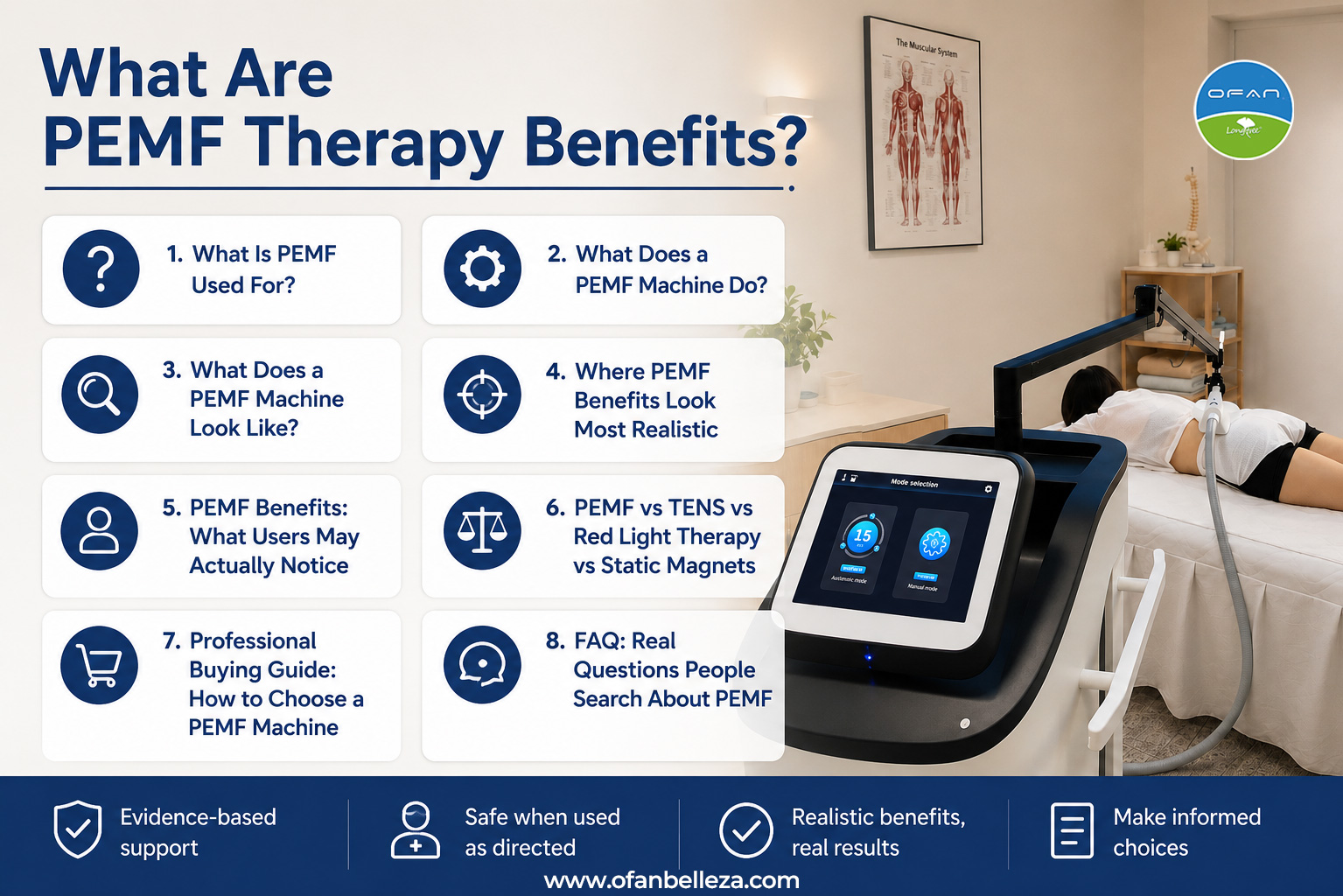
What Is PEMF Used For?
PEMF stands for pulsed electromagnetic field therapy. A PEMF machine uses coils, pads, mats, loops, or applicators to create pulsed electromagnetic fields around a target area of the body. In plain language, it does not “zap” the body like a TENS unit, and it is not the same as a static magnet bracelet.
The most realistic PEMF benefits are not “instant healing” or “whole-body repair.” Better-supported uses are more specific: selected bone-healing situations, some musculoskeletal pain conditions, and certain osteoarthritis symptoms. PEMF is usually discussed as an adjunct to standard care, not as a replacement for medical treatment.
What Does a PEMF Machine Do?
A PEMF machine sends pulsed electromagnetic fields through a coil, mat, loop, brace, or applicator. The applicator is placed over or near the target area, such as a knee, shoulder, lower back, foot, or a physician-prescribed bone-healing site.
For wellness devices, the goal is often relaxation, pain support, or general recovery. For medical bone-growth stimulators, the goal is more specific: supporting bone-healing biology in selected clinical situations under professional guidance.
What PEMF Does Not Do
- It does not replace surgery when surgery is medically required.
- It does not guarantee cartilage regrowth.
- It does not cure every type of chronic pain.
- It does not replace physical therapy, exercise, medication, or physician care when those are needed.
- It should not be used to self-treat a fracture, blood clot, infection, severe swelling, or new neurological symptoms.

What Does a PEMF Machine Look Like?
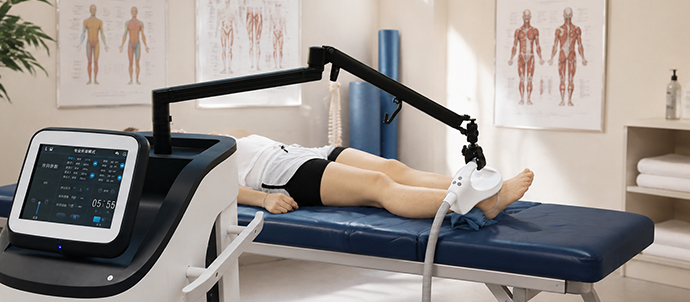
PEMF machines do not all look the same. Some look like full-body mats, while others look like local treatment pads, circular coils, wearable braces, or clinic machines with a control console.
| PEMF Device Type | What It Looks Like | Common Use Case | Buyer Note |
|---|---|---|---|
| Full-body PEMF mat | A thicker yoga-style mat with embedded coils | Relaxation, broad-area wellness sessions | Check whether it is a wellness product or cleared for a specific medical indication. |
| Local applicator or loop | A round loop, paddle, pad, or coil | Knee, shoulder, back, wrist, foot | Better for targeting one joint or small area. |
| Wearable brace-style device | A brace or garment with a built-in coil | Prescribed bone-healing support | Usually more medical and indication-specific. |
| Clinic PEMF machine | Control console plus cables and applicators | Physical therapy, sports rehab, pain clinics | Ask the provider about parameters and treatment plan. |
For distributors How to Choose PEMF Machine
Need help choosing the right PEMF therapy device? Contact OFAN today👉Get Quote Nowto discuss your project, product requirements, and cooperation plan.

👉Contact OFAN for OEM/ODM PEMF Therapy Device Solutions
👉Click to View: PEMF Therapy Machine
👉READ MORE
Where PEMF Benefits Look Most Realistic
| Use Case | Evidence Level | Realistic Expectation | What to Avoid Claiming |
|---|---|---|---|
| Nonunion fracture or bone-growth stimulation | Stronger for selected prescribed indications | May support healing in defined cases under clinician direction | “Heals every fracture faster” |
| Knee osteoarthritis symptoms | Moderate but mixed | Some users may see short-term pain and function improvement | “Regrows cartilage” |
| General musculoskeletal pain | Mixed | May reduce pain in selected conditions | “Works for all chronic pain” |
| Postoperative pain or edema support | Device-dependent | Adjunctive symptom support, not a replacement for post-op care | “No need for rehab or medication” |
| Sleep, fatigue, detox, general wellness | Weak or marketing-heavy | Some people may report relaxation, but disease claims need evidence | “Detoxes cells” or “cures inflammation” |
For osteoarthritis, a systematic review and meta-analysis published in Bioelectromagnetics reported beneficial short-term effects of PEMF on pain, stiffness, and physical function compared with placebo, while also noting that long-term effects and quality-of-life outcomes need more confirmation.
A 2024 randomized controlled trial in end-stage knee osteoarthritis found that PEMF combined with home-based exercise improved knee muscle strength and reduced pain more than home-based exercise alone after 8 weeks. However, the authors also noted limitations, including no long-term follow-up.
PEMF Benefits: What Users May Actually Notice
People often search for “PEMF benefits” because they want to know what they may actually feel in daily life. The answer should be practical: less pain, easier movement, reduced stiffness, or better tolerance for exercise may happen in some users, but results vary.
1. Pain May Feel Lower in Some Conditions
For users searching “can PEMF help with pain,” the honest answer is: sometimes, for some conditions, and usually not overnight. Pain response depends on the diagnosis, device parameters, session frequency, baseline inflammation, activity level, sleep, and whether the user is also doing rehabilitation.
- You may notice easier movement after several sessions.
- Pain scores may drop modestly rather than disappear completely.
- Results are usually more meaningful when paired with exercise, physical therapy, weight management, and medical guidance.
2. PEMF May Support Selected Bone-Healing Cases
One of the more credible medical uses of PEMF-related technology is non-invasive bone-growth stimulation for selected cases such as established nonunion or failed fusion, depending on the device and clinical criteria. This is very different from buying a general wellness PEMF mat online.
For bone-healing use, the key point is professional direction. A prescription bone-growth stimulator has a specific indication, usage schedule, and monitoring plan. A consumer wellness mat should not be marketed as a fracture-healing device unless it has the proper clearance for that claim.
3. PEMF May Help Function, Not Just Pain
A useful way to judge PEMF machine benefits in humans is not only “Did I feel something during the session?” but “Can I move better afterward?” For knee osteoarthritis, useful metrics include walking time, stair tolerance, sit-to-stand ability, morning stiffness, and exercise tolerance.
| Metric | How to Record | Why It Matters |
|---|---|---|
| Pain score | 0–10 before and 2 hours after use | Tracks short-term response |
| Morning stiffness | Minutes until the joint loosens | Useful for arthritis tracking |
| Sit-to-stand test | Time needed for 5 chair stands | Shows functional strength |
| Walking tolerance | Minutes before pain increases | Reflects real-world mobility |
| Medication change | Record only; do not self-adjust medication | Helps clinician review progress |
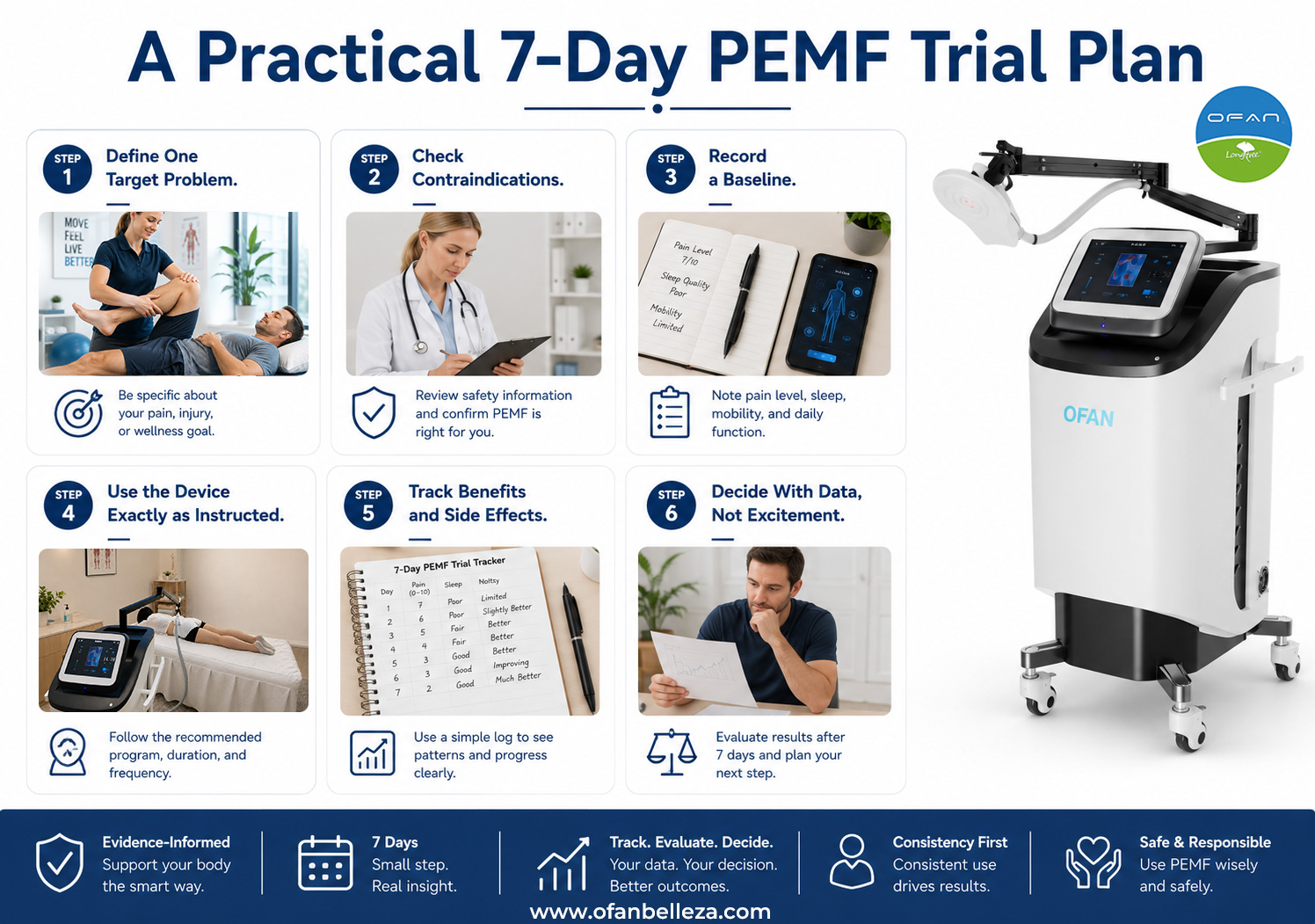
A Practical 7-Day PEMF Trial Plan
This is not a medical prescription. It is a practical way to evaluate whether a PEMF device is doing anything meaningful before committing to long-term use or purchase.
Step 1: Define One Target Problem
Do not test “whole-body wellness.” Choose one measurable issue, such as right knee stiffness, post-exercise calf soreness, low-back tightness, plantar heel pain, or a clinician-diagnosed condition.
Step 2: Check Contraindications
Before first use, check the manual for warnings about pacemakers, implanted devices, pregnancy, active bleeding, infection, cancer-related warnings, seizure history, metal implants, and post-surgical restrictions.
Step 3: Record a Baseline
For 2–3 days, record your pain and function without PEMF. This prevents a common mistake: assuming normal day-to-day fluctuation is a treatment effect.
Step 4: Use the Device Exactly as Instructed
Use the manufacturer’s recommended placement, session duration, and intensity. Do not stack multiple PEMF sessions just because “more seems better.” More exposure is not automatically more effective.
Step 5: Track Benefits and Side Effects
Record pain, stiffness, mobility, sleep, and any negative reactions such as headache, dizziness, skin discomfort, increased pain, palpitations, or unusual symptoms.
Step 6: Decide With Data, Not Excitement
After 7 days, look for a consistent pattern. One good session is not enough. A reasonable positive sign is repeated improvement in pain or function without side effects.
| Day | Session Length | Pain Before | Pain After | Function Note | Side Effects |
|---|---|---|---|---|---|
| Day 1 | ____ minutes | __/10 | __/10 | Walking, stairs, stiffness | None / describe |
| Day 3 | ____ minutes | __/10 | __/10 | Any repeated change? | None / describe |
| Day 7 | ____ minutes | __/10 | __/10 | Better, same, or worse? | None / describe |
PEMF vs TENS vs Red Light Therapy vs Static Magnets
Many buyers confuse PEMF with TENS, red light therapy, heat therapy, vibration massage, or static magnets. They are not the same.
| Therapy | Main Mechanism | What the User Feels | Best-Fit Use Case | Main Limitation |
|---|---|---|---|---|
| PEMF | Pulsed electromagnetic fields through coils | Often little to no sensation | Selected bone-growth support, pain, arthritis symptoms | Parameters and evidence vary widely |
| TENS |
Electrical stimulation through skin electrodes | Tingling or buzzing | Pain modulation | Does not directly equal tissue healing |
| Red Light Therapy | Light exposure at specific wavelengths | Warmth or mild skin sensation | Skin, superficial tissue, some pain support | Penetration and dose matter |
| Static Magnets | Constant magnetic field | Usually nothing | Mostly consumer wellness products | Pain evidence is weak or inconclusive |
Professional Buying Guide: How to Choose a PEMF Machine
A good PEMF buying decision should not be based on slogans like “cellular recharge” or “whole-body detox.” It should be based on use case, device type, parameters, safety information, and whether the evidence matches the product.
1. Match the Device to the Use Case
If your goal is bone healing after a diagnosed nonunion, do not shop like you are buying a wellness mat. You need clinician guidance and an indication-specific device. If your goal is relaxation, do not expect the same evidence level as a prescription bone-growth stimulator.
2. Verify Regulatory Language
Look for exact wording. “FDA cleared for a specific indication” is different from “FDA registered facility” or “FDA listed.” A manufacturer should be able to explain the exact intended use and provide documentation.
3. Ask for Parameters, Not Slogans
A serious PEMF supplier should be able to explain the following:
- Field intensity range
- Frequency range
- Waveform
- Applicator size
- Recommended session time
- Contraindications
- Cleaning and maintenance
- Clinical evidence for the exact model or technology
4. Check Whether the Studies Match the Product
A common marketing trick is to cite PEMF research in general, then sell a device with different intensity, frequency, waveform, applicator design, and treatment protocol. Evidence does not automatically transfer from one PEMF machine to another.
5. Look for Return Policy and Real Support
Because individual response varies, a transparent return window, clear warranty, human support, and complete user manual matter more than exaggerated claims.
Who Should Not Use PEMF Without Medical Advice?
Ask a clinician before using PEMF if you have any of the following:
- Pacemaker, defibrillator, insulin pump, cochlear implant, neurostimulator, or other implanted electronic device
- Pregnancy or trying to conceive
- Active cancer or recent cancer treatment near the target area
- Active infection, fever, or suspected bone infection
- Blood clot risk or unexplained swelling
- Recent surgery without surgeon approval
- Unexplained severe pain, numbness, weakness, or new neurological symptoms

FAQ: Real Questions People Search About PEMF
What does a PEMF machine do?
A PEMF machine creates pulsed electromagnetic fields through coils or applicators. Depending on the device and indication, it may be used for selected bone-healing support, musculoskeletal pain, osteoarthritis symptoms, or postoperative pain and edema support.
What do PEMF machines do that a heating pad does not?
A heating pad mainly warms tissue. PEMF uses electromagnetic pulses and may work through different biological signaling mechanisms. Warmth is easier to feel, while PEMF often produces little or no sensation.
Can PEMF help arthritis?
For osteoarthritis, especially knee osteoarthritis, some studies suggest short-term improvements in pain and function. However, results vary, and PEMF should be viewed as an adjunct to exercise, weight management, physical therapy, medication when appropriate, and clinician guidance.
Can PEMF make pain worse?
Some people may feel no change; some may feel temporary discomfort or increased symptoms. Stop using the device and seek medical advice if pain worsens, swelling increases, neurological symptoms appear, or you feel dizzy, unwell, or abnormal heart symptoms.
Has a PEMF machine been used on humans?
Yes. PEMF and related electromagnetic therapies have been studied in humans for osteoarthritis, musculoskeletal pain, postoperative pain and edema, and bone-healing applications. However, “used in humans” is not the same as “proven for every condition.”
What does a PEMF machine look like?
It may look like a mat, a loop, a pad, a handheld applicator, a brace, or a clinic console with cables and coils. Medical bone-growth devices often look more like targeted applicators or wearable braces than spa-style wellness mats.
How long does PEMF take to work?
For pain-related use, some people report changes after a few sessions, while others need weeks or notice no benefit. For bone-growth use, progress should be monitored by imaging and clinician follow-up, not by “feeling better” alone.
Are PEMF benefits permanent?
Not necessarily. If pain is driven by arthritis, overload, poor sleep, weakness, inflammation, or injury mechanics, symptoms may return unless the underlying drivers are addressed. PEMF may help some symptoms, but long-term improvement usually depends on a complete plan.
Bottom Line: The Realistic Way to Think About PEMF Benefits
PEMF therapy is best understood as a noninvasive adjunct technology with specific promising areas, not a miracle wellness shortcut. The most credible PEMF benefits are tied to defined use cases, measurable outcomes, appropriate device selection, and realistic expectations.
Sources and Further Reading
- NCCIH: Magnets for Pain — What You Need to Know
- PubMed: Pulsed Electromagnetic Fields for Osteoarthritis — Systematic Review and Meta-analysis
- Frontiers in Medicine, 2024 RCT on PEMF and end-stage knee osteoarthritis
- Federal Register: FDA final order on non-invasive bone growth stimulators
- Anthem Clinical Guideline: Electrical Bone Growth Stimulation


