


Medical review note: This article is for educational purposes only. It does not replace diagnosis or treatment from a licensed healthcare professional.
What Is Shockwave Therapy?
Shockwave therapy, also called extracorporeal shockwave therapy or ESWT, is a non-invasive treatment that sends acoustic energy waves through the skin into a painful tendon, fascia, muscle, or bone-related area. In plain English, a clinician uses a handheld applicator, usually with gel on the skin, to deliver controlled sound-wave pulses to a target area.
It is often discussed for chronic musculoskeletal problems such as plantar fasciitis, Achilles tendinopathy, tennis elbow, patellar tendinopathy, calcific shoulder tendinopathy, and some bone-healing problems. However, ESWT is not a magic cure. Results depend on the diagnosis, device type, treatment protocol, clinician skill, and whether the patient follows rehabilitation and load-management advice.
Quick Summary Table
| Question | Plain-English Answer |
|---|---|
| Is ESWT surgery? | No. It is usually outpatient and non-invasive. |
| Does it use electricity inside the body? | No. The treatment energy is mechanical acoustic energy, not an electrical current through the body. |
| How long does one session take? | The actual delivery may take only a few minutes, but assessment and setup make the appointment longer. |
| How many sessions are common? | Many protocols use about 3 sessions, often one week apart, but this varies by condition and device. |
| When do results appear? | Some people feel short-term pain relief quickly, but durable improvement often takes 6–12 weeks after the final treatment. |
What “Extracorporeal” Means
“Extracorporeal” simply means outside the body. The ESWT device stays outside the body, and the sound waves pass through the skin to the target tissue. For many patients, the setup feels closer to an ultrasound-style treatment than to surgery: gel is applied, the applicator is placed on the painful area, and the clinician adjusts the dose based on protocol and patient tolerance.
What a Typical Session Looks Like
A normal ESWT appointment usually includes the following steps:
- Diagnosis check: The clinician confirms the painful structure and makes sure ESWT is appropriate.
- Safety screening: The clinician checks contraindications such as pregnancy, local infection, cancer at the treatment site, recent steroid injection, blood-clotting problems, or implanted cardiac devices.
- Target marking: The painful point or treatment area is identified by palpation, movement testing, or imaging guidance when needed.
- Gel application: Contact gel is applied to help acoustic waves pass into the tissue.
- Treatment delivery: The probe is placed on the skin and the dose is adjusted according to the treatment plan and tolerance.
- Aftercare advice: The patient receives guidance on activity, exercise, medication, and follow-up.

How Shockwave Therapy Works
The Simple Version
Shockwave therapy does not “massage” tissue in the usual sense. It applies short bursts of acoustic energy. The goal is to stimulate a biological response in tissue that has become painful, irritated, or slow to heal.
Commonly discussed mechanisms include local blood-flow changes, pain modulation, nerve desensitization, collagen remodeling, and stimulation of healing-related cellular activity. Researchers still do not claim that every mechanism is fully understood, so responsible marketing should avoid saying ESWT “guarantees tissue regeneration.”

Why Some People Feel Pain Relief Quickly
Some patients feel less pain right after treatment. This does not always mean the tissue has fully healed. Short-term pain relief may come from temporary changes in pain signaling. More durable improvement usually takes longer because tissue remodeling and load adaptation are gradual.
Focused Shockwave vs Radial Shockwave
This is one of the most important topics for patients, clinics, and device buyers. Many websites use the word “shockwave” for two different technologies: focused shockwave and radial pressure wave.
| Feature | Focused Shockwave | Radial Pressure Wave / Radial Shockwave |
|---|---|---|
| Energy pattern | Energy is focused at a selected depth. | Energy is highest near the applicator and spreads outward. |
| Common use | Often considered for deeper targets, bone-related indications, and some calcification protocols. | Often used for more superficial tendon and fascia problems. |
| Device complexity | Usually more complex. | Usually simpler. |
| Typical cost | Often higher. | Often lower. |
| Buyer question | Ask about depth, focusing method, energy flux density, and approved indications. | Ask about pressure, frequency, pulses, applicator heads, and service life. |
Procurement Tip
Do not ask only, “Is this a shockwave machine?” Ask: “Is it focused shockwave or radial pressure wave? What exact indications are supported?
What Patients Should Know
Where the Evidence Is Stronger
ESWT is most commonly discussed for chronic tendon and fascia conditions. Plantar fasciitis is one of the most searched and most studied uses. Some FDA PMA records describe specific ESWT devices as non-surgical alternatives for chronic plantar fasciitis in patients with symptoms lasting six months or more and a history of unsuccessful conservative therapy.
Common Short-Term Side Effects
- Temporary pain during or after treatment
- Redness of the skin
- Bruising
- Swelling
- Numbness or altered sensation
- Short-term soreness or flare-up
Rare complications such as tendon or ligament rupture have been reported, especially in contexts such as recent steroid injection or poor tissue quality. This is why pre-treatment screening matters.
Who Is a Good Candidate for ESWT?
A good candidate is usually someone with a confirmed diagnosis, persistent symptoms, and a clear reason to try a non-invasive treatment before considering injections or surgery.
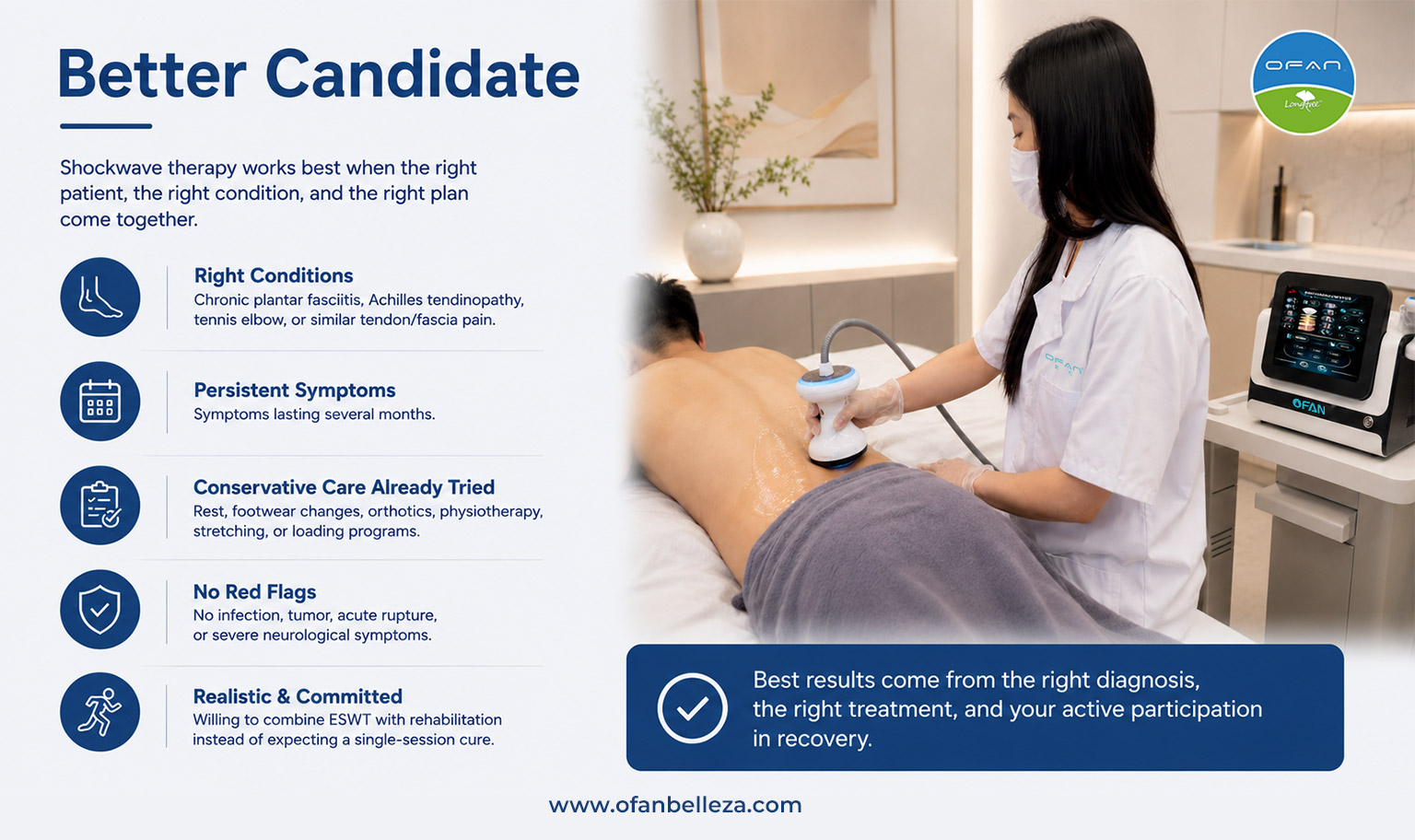
Better Candidate
- Chronic plantar fasciitis, Achilles tendinopathy, tennis elbow, or similar tendon/fascia pain
- Symptoms lasting several months
- Conservative care already tried, such as rest, footwear changes, orthotics, physiotherapy, stretching, or loading programs
- No red flags such as infection, tumor, acute rupture, or severe neurological symptoms
- Willing to combine ESWT with rehabilitation instead of expecting a single-session cure
Poor Candidate or Needs Extra Medical Review
- Pregnancy or trying to conceive
- Cancer, tumor, or infection at the treatment site
- Recent steroid injection in the same area
- Blood-clotting disorder or anticoagulant medication
- Pacemaker or implanted cardiac device
- Acute tendon or fascia tear
- Current thrombosis
- Unstable neurological or cardiac condition

After Treatment: What to Avoid
Many patients can continue light daily activity after treatment, but they should avoid doing more than usual just because the area feels temporarily better. Many protocols advise avoiding high-impact exercise, strenuous activity, or activities that stress the treated area for 24–48 hours.
- Avoid running or jumping immediately after treatment unless your clinician says otherwise.
- Do not suddenly increase walking distance or training load.
- Ask your clinician before using anti-inflammatory medication such as ibuprofen or naproxen.
- Report unusual swelling, severe pain, numbness, or loss of function.

For Clinics and Distributors: Device Buying Checklist
For a clinic or distributor, device selection is not just about a glossy brochure or high pressure numbers. Use a structured buying checklist before purchasing.
- Regulatory status: Confirm the exact model, not just the brand name.
- Technology type: Focused shockwave, radial pressure wave, or combined platform.
- Indications: What conditions are supported by the IFU, clinical evidence, and local regulations?
- Treatment parameters: Energy flux density, pressure/bar, frequency, pulses, applicator heads, and depth.
- Training: Does the supplier provide protocol training and contraindication screening?
- Consumables: Gel, applicator heads, revision kits, handpiece wear parts.
- Service: Calibration schedule, warranty, loaner unit, and response time.
- Documentation: Consent forms, contraindication checklist, and outcome-tracking template.
For distributors How to Choose OFAN Shockwave Therapy Machine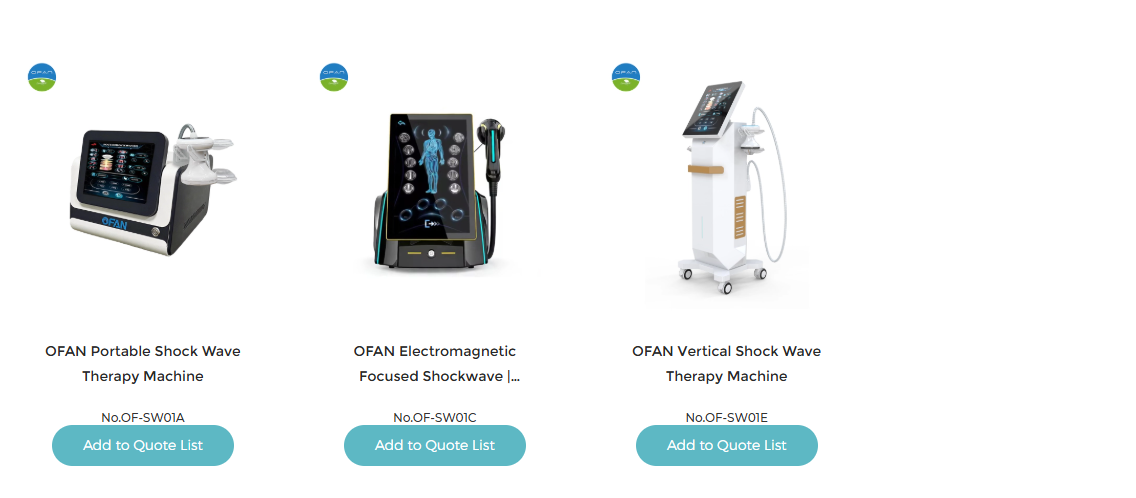
Need help choosing the right Shockwave Therapy Device (focused shockwave) ? Contact OFAN today👉Get Quote Nowto discuss your project, product requirements, and cooperation plan.
👉Click to View: Shockwave Therapy Machine
👉READ MORE
FAQ
Is shockwave therapy painful?
It can be uncomfortable, especially over a painful tendon or fascia. Most clinics adjust intensity so the patient can tolerate the session. Some people feel short-term soreness afterward.
How many ESWT sessions do I need?
Many protocols use around three sessions, often one week apart, but the right number depends on the diagnosis, device type, symptom duration, and response to treatment.
How soon will I feel better?
Some patients feel short-term relief quickly, but more durable improvement often takes weeks. For heel pain, some hospital patient information suggests many people notice improvement around 6–12 weeks after the final session.
Is ESWT better than steroid injection?
It depends on the condition, time frame, and patient risk factors. Steroid injections may reduce pain quickly, but repeated or poorly timed injections can carry tissue-related risks. ESWT is non-invasive and may be considered when conservative care has not worked, but it usually should be combined with rehabilitation.
Can I run after shockwave therapy?
Do not plan a hard run immediately after ESWT unless your clinician specifically allows it. Many protocols advise avoiding impact sports or high-load activity for 24–48 hours after each session.
Can I buy a home shockwave therapy machine?
Be careful. Low-cost online devices may not match clinical ESWT devices in output, safety controls, training, or regulatory status. If you are buying for a clinic, verify the exact model, service support, training, warranty, and local compliance. If you are a patient, ask a licensed clinician before using any device on a painful tendon, fascia, or bone-related condition.
References
- Mayo Clinic. “Shockwave treatment: A new wave for musculoskeletal care.
- Royal National Orthopaedic Hospital. “A Patient's guide to Radial Extracorporeal Shockwave Therapy (ESWT).”
- U.S. Food and Drug Administration. “Premarket Approval (PMA): Dornier Epos Ultra.”
- NICE. “Extracorporeal shockwave therapy for refractory plantar fasciitis.”
- Royal Orthopaedic Hospital. “Shockwave Therapy for Heel Pain.”


